
The moment you step off the plane in Bangkok, the food beckons. Aromatic, spicy, tangy, sweet — Thai cuisine is a sensory symphony that has captivated travelers for decades. But here’s the problem most visitors face: they’re eating the tourist version, not the real thing. If you’re searching for the best Thai food in Bangkok old town, you’re probably standing on Khao San Road right now, surrounded by overpriced pad thai and bewildered backpackers eating mango sticky rice from plastic plates. There’s a better way. And it’s only a five-minute walk away.
Bangkok’s old town — known as Phra Nakhon district — is a treasure trove of authentic Thai cuisine, but only if you know where to look. This guide is for discerning travelers who want to eat like locals, not like they’ve been herded through a culinary theme park. We’re going to show you exactly where to find the best Thai food in Bangkok old town, why Khao San Road fails the authenticity test, and introduce you to a neighborhood spot that serves the kind of food Thai people actually eat at home.
Whether you’re staying near the Grand Palace, exploring the historic temples, or using the famous Samsen Center as your base, this guide will transform the way you experience Thai food in Bangkok.
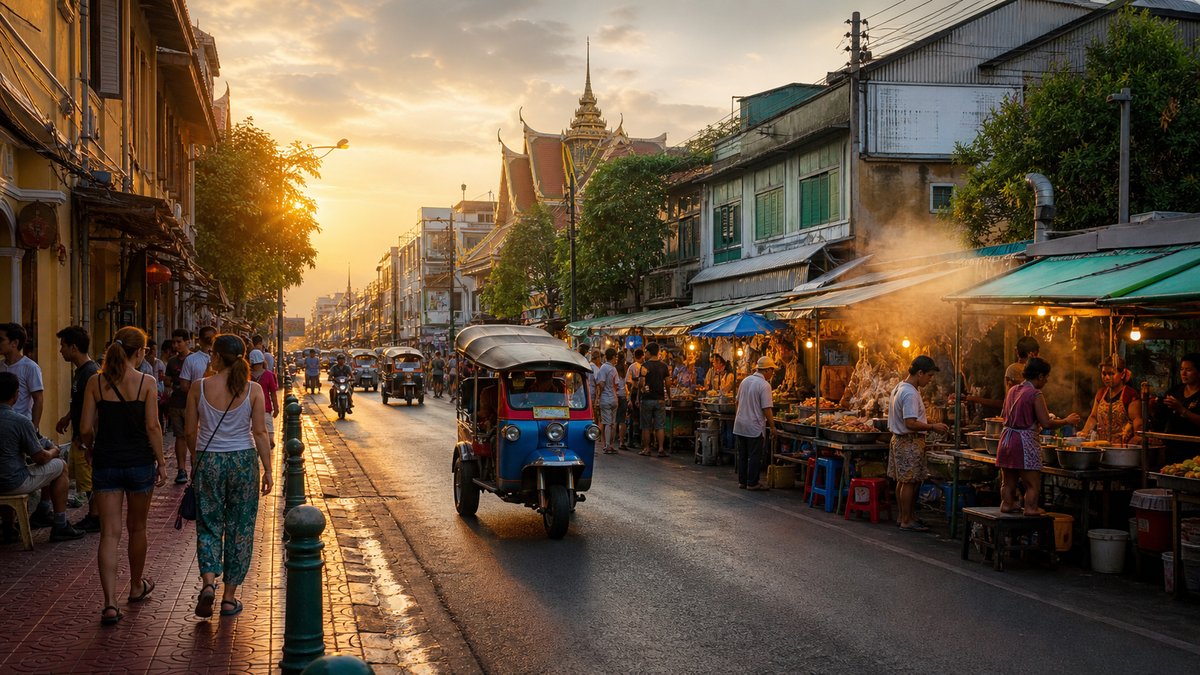
Why Khao San Road Is Overrated for Real Thai Food
Let’s address the elephant in the room — or rather, the pad thai in the pan. Khao San Road is Bangkok’s most famous backpacker street, a rite of passage for budget travelers crossing Southeast Asia. It’s chaotic, it’s electric, and it’s absolutely not where you should be eating Thai food.
The Tourist Trap Problem
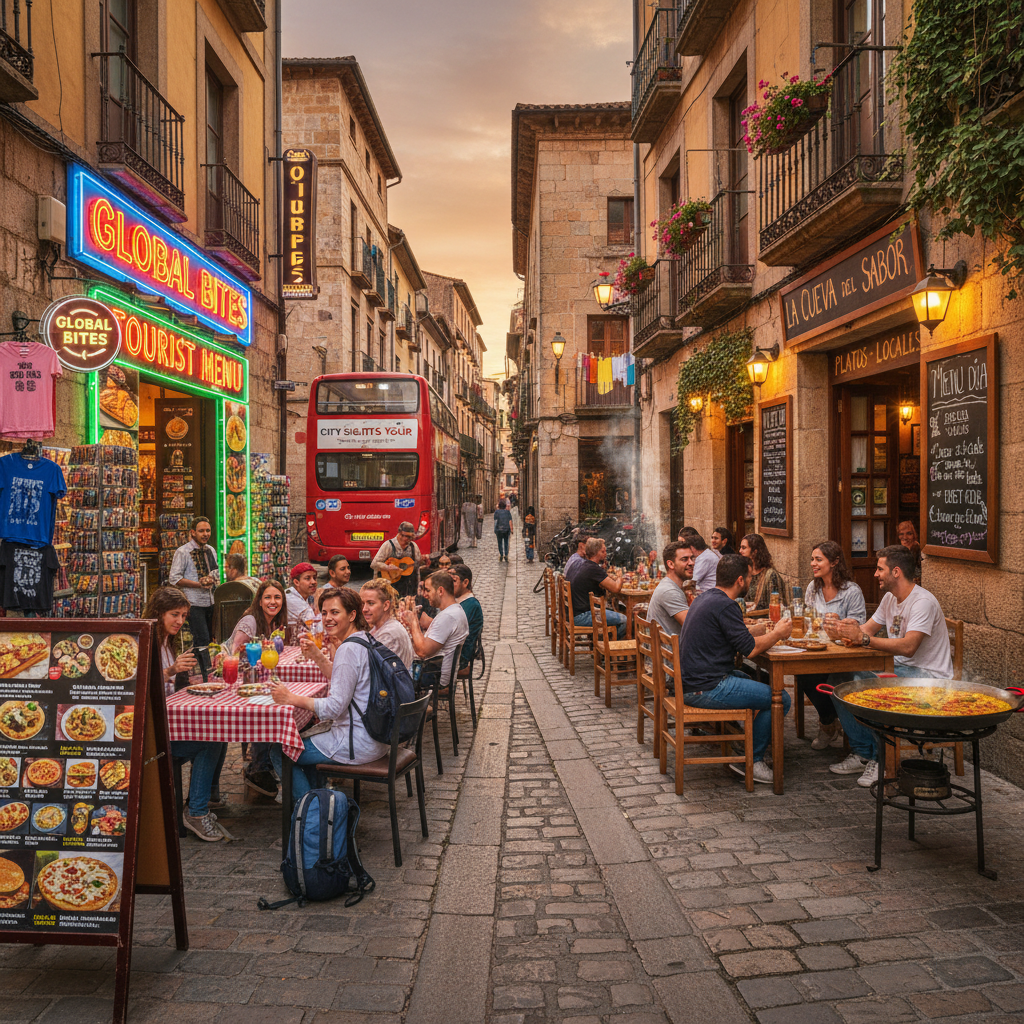
Khao San Road evolved into a tourist ecosystem decades ago. The restaurants there aren’t cooking for Thai people — they’re cooking for travelers who’ve never had real Thai food and won’t know the difference. The menus are in English with photos of every dish. The servers speak multiple languages and hand you a laminated menu with Western prices. This isn’t authentic Thai cuisine; it’s Thai cuisine designed to be safe, mild, and profitable.
Walk five minutes down any side street and you’ll find the same restaurants empty while the Khao San establishments queue up customers. The food is designed to be palatable to the widest possible audience, which means it’s been adjusted — less spice, less fish sauce punch, more sugar, more oil. The flavors that make Thai food extraordinary have been diluted into something that won’t offend anyone. And that includes you, even if you don’t realize it yet.
Price vs. Quality: What You’re Really Paying For
Here’s what really grinds my gears about eating on Khao San Road: you’re paying premium prices for inferior food. A plate of pad thai that should cost 50-60 THB at a local eatery runs 150-200 THB on the tourist strip. The tom yum goong? Often made with inferior shrimp, diluted with water to stretch portions, and priced at nearly double what you’d pay a ten-minute walk away.
According to the Tourism Authority of Thailand, visitors to Bangkok consistently rate “food quality” as their top priority when choosing restaurants. Yet most tourists never venture beyond the illuminated signs and English menus. They’re leaving Bangkok having experienced perhaps 20% of what Thai cuisine can offer — and paying three times more for the privilege.
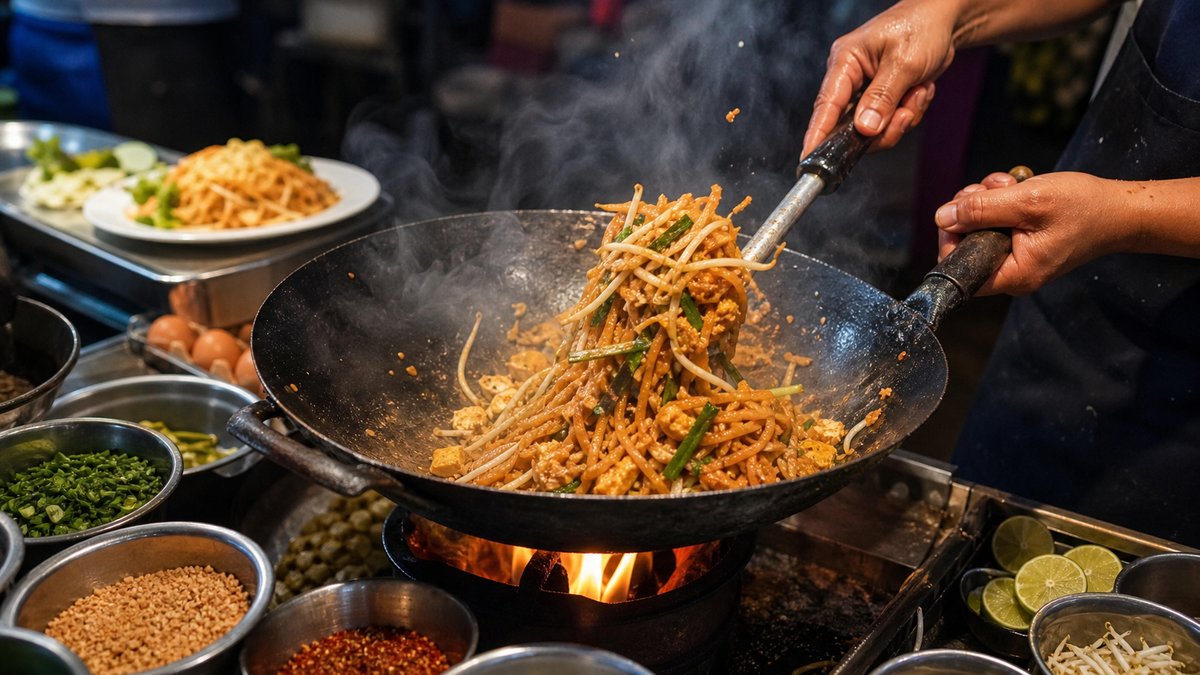
Where Real Locals Eat Thai Food in Bangkok Old Town
The good news is that authentic Thai food in Bangkok’s old town isn’t hidden — it’s just overlooked. Walk away from the backpacker chaos and you’ll find neighborhood restaurants where Thai families gather for Sunday lunch, where office workers grab quick lunches, and where the food is made the way it’s been made for generations.
Samsen Center: The Local Alternative
Enter Samsen Center — not a tourist destination, but a genuine local food hub that’s been feeding Bangkokians for years. Located just steps from the backpacker chaos of Khao San Road, this is where Thai people actually eat when they want good food without the tourist markup.
Samsen Center flies under the radar of most travel guides, which is precisely what makes it special. It’s not trying to be discovered. The restaurants here don’t have English signs. The servers might not speak your language. The menus might not have photos. But the food? The food is the real deal — made by people who’ve been perfecting these recipes for decades, cooking for their neighbors, not for Instagram.
This is the answer to your search for the best Thai food in Bangkok old town. Not because it’s fancy or famous, but because it’s authentic in the way that actually matters: it’s the food Thai people eat, made the way it’s supposed to be made, at prices that reflect real value.
What Makes Samsen Different
The difference between Samsen Center and Khao San Road comes down to intent. Restaurants on Khao San Road are in the business of feeding tourists. Restaurants at Samsen Center are in the business of feeding locals who will return week after week, year after year. When your customers are Thai, you can’t cut corners on fish sauce quality. You can’t substitute fresh herbs for dried. You can’t make the curry milder than it should be. Your regulars will notice, and they’ll stop coming.
This creates a self-correcting quality mechanism that tourist-area restaurants simply don’t have. The pad thai at Samsen tastes the way pad thai is supposed to taste because it’s been made the same way for years by people who actually eat it. The som tam has the proper heat level because that’s how Thai people make it, not the “mild for foreigners” version.
For travelers willing to step slightly off the beaten path, this neighborhood represents the best Thai food in Bangkok old town — authentic, affordable, and absolutely unforgettable.
Must-Try Authentic Thai Dishes in Bangkok Old Town
Now that you know where to go, let’s talk about what to eat. Thai cuisine is vast, regional, and often misunderstood outside Thailand. These are the dishes you should seek out — the versions made with proper technique, real ingredients, and the kind of care that transforms simple ingredients into something transcendent.
Pad Thai (The Real Version)
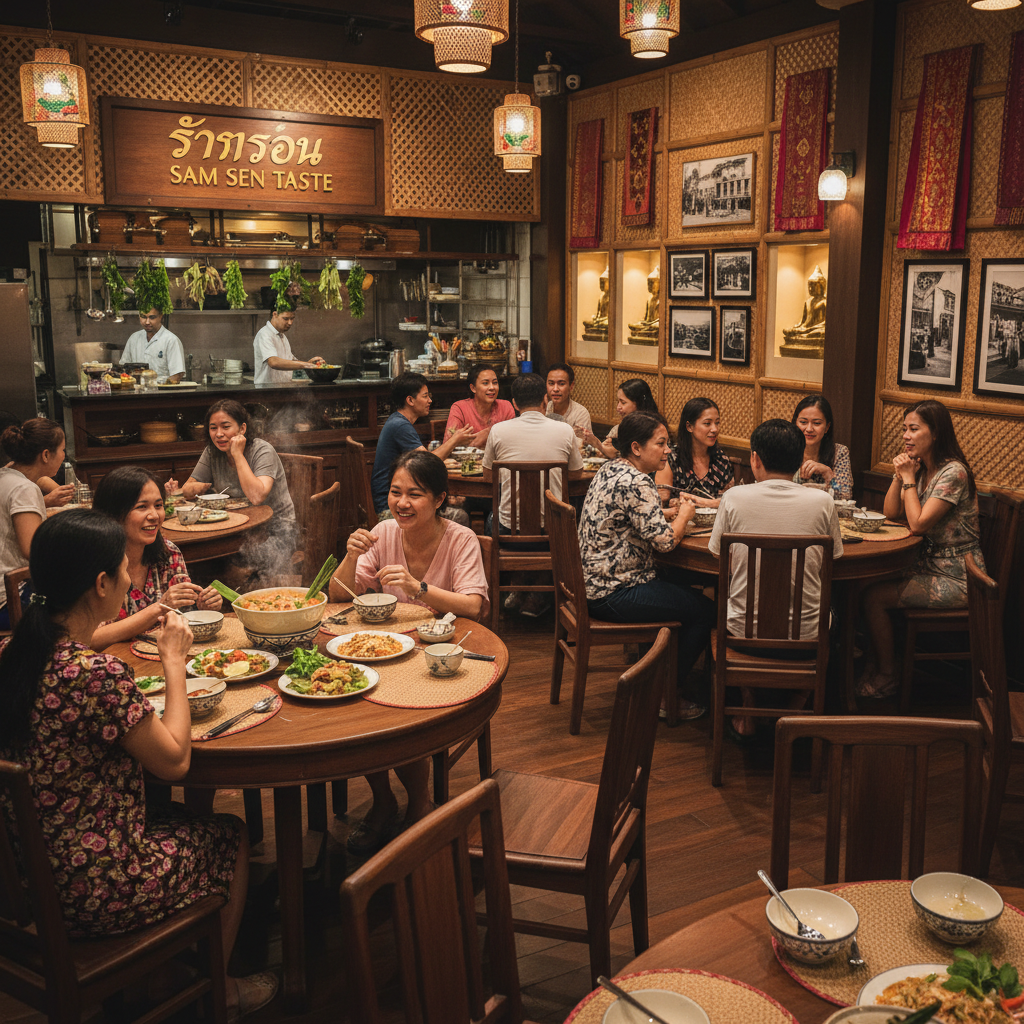
Let’s start with the obvious one, because most people have had pad thai and most people have had the wrong version. Real pad thai is a harmony of flavors: the sweetness of tamarind, the saltiness of fish sauce, the umami of dried shrimp, the crunch of peanuts, the lime acid, and the subtle heat of chili. It’s not just noodles with sauce.
The best pad thai is cooked in a blazing hot wok, never in a flat pan. The noodles should have char spots. The bean sprouts should be barely cooked — still crunchy. The shrimp should be pink and plump. And it should arrive with a side of fresh lime and crushed peanuts, never with a knife and fork.
At local spots like those at Samsen Center, a proper plate of pad thai costs between 50-80 THB. At Khao San Road tourist restaurants, expect to pay 150-200 THB for something considerably worse. This is the pad thai you came to Thailand to eat.
Som Tam (Green Papaya Salad)
If pad thai is Thailand’s most famous dish, som tam is its most beloved — and it’s almost impossible to find a good version outside Thailand. This is a salad that’s alive with flavors: shredded green papaya, cherry tomatoes, long beans, dried shrimp, peanuts, lime, fish sauce, palm sugar, and enough chili to make your eyes water.
The key to great som tam is balance. Too sweet and it’s cloying. Too fishy and it overwhelms. Too mild and it’s just cabbage with dressing. The best som tam hits all the notes — sweet, sour, salty, spicy — in a single bite. And it should be made to order, the mortar and pestle working the ingredients together while you wait.
A note for spice tolerance: the authentic version is significantly spicier than what you’ll find at tourist restaurants. If you want the real experience, ask for it “Thai spicy” at least once. Your sinuses will clear, your eyes will water, and you’ll understand why Thais are obsessed with this dish.
Tom Yum Goong
This is the soup that made Thai cuisine famous worldwide, and the version you’ll find in Bangkok old town will ruin restaurant tom yum for you forever. Clear, aromatic, intensely flavored, this soup showcases the genius of Thai cuisine: building complex flavors from simple ingredients.
Real tom yum is built on lemongrass, galangal, kaffir lime leaves, bird’s eye chilies, and lime juice, with shrimp (goong) as the protein. The broth should be spicy, sour, and aromatic — a sensory experience that hot soup haters often cite as their gateway drug to loving soup. Good tom yum also contains mushrooms, tomatoes, and cilantro, with whole shrimp that you peel yourself.
Avoid tom yum that comes from a jar, packet, or pre-made base. Real tom yum takes time to build — the aromatics need to steep, the chilies need to infuse, the lime needs to be added at the right moment. At authentic local restaurants, a proper bowl costs 80-120 THB and will change your understanding of what soup can be.
Green Curry (Gaeng Keow Wan)
Green curry is often misunderstood as simply “curry with green paste.” In reality, it’s a delicate balance of coconut cream, green curry paste, Thai basil, and meat — usually chicken or pork, sometimes seafood. The green paste itself contains lemongrass, galangal, kaffir lime peel, cilantro root, and green chilies, ground together into a paste that forms the soul of the dish.
The best green curry in Bangkok old town is made fresh, with coconut cream that hasn’t been stabilized for shelf life and basil that was cut that morning. The curry should be creamy but not heavy, spicy but not burning, with the aromatic qualities of the fresh herbs at the forefront.
A proper green curry at a local restaurant costs 80-120 THB and comes with rice. It’s the kind of dish that makes you understand why Thai cuisine is considered one of the world’s greatest — simple ingredients, transformed by technique and balance into something extraordinary.
Sapparot Series: A Unique Signature
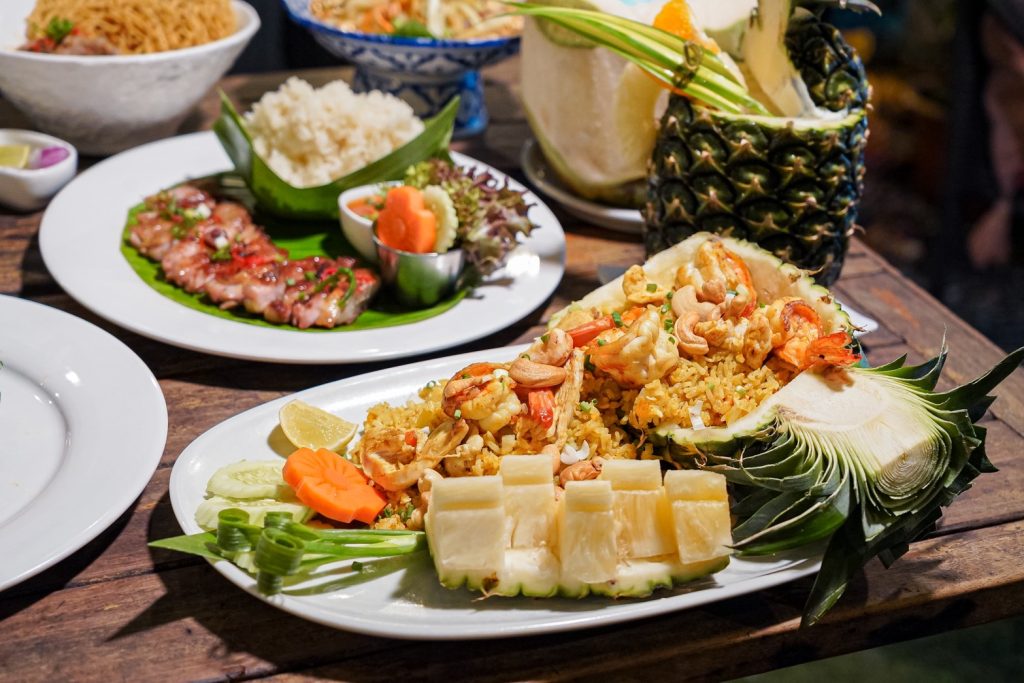
Now for something you won’t find anywhere else: the Sapparot Series at Samsen Center. This signature offering represents Thai culinary creativity at its finest — dishes that incorporate pineapple (sapparot in Thai) in innovative ways that showcase the sweet-sour-spicy harmony at the heart of Thai cooking.
The Sapparot Series isn’t just a gimmick. It’s an exploration of how pineapple’s natural sweetness and acidity can complement traditional Thai flavors, creating dishes that feel both familiar and excitingly new. Whether it’s a pineapple-infused curry, a sapparot-enriched stir-fry, or a creative interpretation of a classic dish, this series represents the kind of culinary innovation that happens when cooks have complete mastery of their craft.
This is the kind of dish that local food lovers travel across Bangkok to find — the reason that Samsen Center has earned its reputation among those in the know. If you’re serious about finding the best Thai food in Bangkok old town, the Sapparot Series should be at the top of your list.
Traditional Thai Recipes at Samsen Center
What sets authentic Thai food apart isn’t just the ingredients — it’s the philosophy behind the cooking. At traditional Thai restaurants like those at Samsen Center, recipes are passed down through generations, techniques refined over decades, and standards maintained because the people cooking care deeply about their craft.
Multi-Cuisine Depth: Thai, Western, Asian
One of the beautiful things about Bangkok’s food scene is its diversity, and Samsen Center reflects this perfectly. While the focus is on authentic Thai cuisine, the center also offers Western and Asian options that maintain the same quality standards. This isn’t compromise — it’s comprehensiveness.
A traveler who wants pad thai one day and a familiar Western option the next can find both at the same high standard. But here’s the thing: most travelers who come to Bangkok and give Thai food a proper chance find they don’t need the familiar option. The Thai food is too good. The flavors are too compelling. The variety is too exciting. But knowing it’s there if you need it provides a comfort that helps you venture further outside your comfort zone.
Fresh Ingredients, Authentic Techniques
The secret to great Thai food is in the ingredients, and authentic Thai restaurants take this seriously. Fresh herbs — lemongrass, galangal, kaffir lime leaves, Thai basil, cilantro — aren’t optional luxuries; they’re the foundation. Chilies are used fresh, not dried. Fish sauce is quality-assured. Coconut milk is fresh, not from a carton. Palm sugar is real.
This matters because Thai cuisine is built on balance — the interplay of sweet, sour, salty, spicy, and bitter that defines the Thai palate. When you use fresh ingredients, that balance is achievable. When you substitute, the balance breaks down, and the food becomes something else: a shadow of what it should be.
At Samsen Center, the commitment to fresh ingredients means every dish is made to order, every sauce is prepared fresh, and every curry paste is ground that day. This is the difference between Thai food as it’s meant to be eaten and the diluted tourist version.
How to Spot Authentic Thai Food (A Local’s Checklist)
Now that you understand the principles, let’s make them practical. Here’s how to identify authentic Thai food when you’re exploring Bangkok’s old town — and how to avoid the tourist traps.
5 Signs of Real Thai Food
1. The Menu Is in Thai First
Restaurants that lead with English menus, photos of every dish, and prices in baht that feel suspiciously high are usually tourist-oriented. Real local restaurants have Thai menus, possibly with English translations added later.
2. Thai People Are Eating There
This is the simplest test. If the restaurant is full of Thai families, office workers, and locals — not tourists with guidebooks — the food is probably real. Locals know where the good food is.
3. The Food Comes Fast and Hot
Authentic Thai food is cooked to order in a blazing hot wok. Dishes shouldn’t take 20 minutes, but they also shouldn’t arrive lukewarm. If your food is steaming and fresh, that’s a good sign.
4. The Spice Is Adjustable, Not Absent
Real Thai food has spice. It’s part of the cuisine’s identity. Restaurants that offer “mild” versions of everything are catering to tourists. The authentic experience includes proper heat.
5. The Prices Reflect Local Reality
If pad thai costs more than 150 THB, you’re at a tourist restaurant. Real local food costs 50-100 THB for most dishes. The prices at Samsen Center should feel almost disappointingly reasonable — in a good way.
Red Flags: When to Walk Away
English-Only Menus with Photos: This is a tourist trap indicator. Authentic restaurants have Thai menus; English is added for convenience, not as the primary language.
“Best Pad Thai in Bangkok” Signs: Anyone claiming to be the best is usually marketing to people who don’t know better. The best Thai food doesn’t need to advertise.
Air Conditioning and English-Speaking Hosts: This isn’t inherently bad, but it correlates with tourist-oriented pricing. Authentic local spots are often open-air with minimal decor.
Empty Restaurants at Meal Times: If it’s noon and the place is empty, there’s a reason. Thai people know where the good food is. Follow their lead.
Menus That List Burger, Pizza, and Fried Rice: A restaurant trying to be everything usually excels at nothing. Thai food-focused restaurants do Thai food better.
Comparing Bangkok’s Thai Food Scenes
Understanding Bangkok’s food geography helps you navigate it better. Let’s compare the main options for finding authentic Thai food in the old town area.
Khao San Road vs. Samsen: Side by Side
| Factor | Khao San Road | Samsen Center |
| Target Audience | Tourists, backpackers | Local Thai families |
| Price Range | 150-300 THB per dish | 50-120 THB per dish |
| Spice Level | Mild, adjustable | Authentic, adjustable |
| Authenticity | Adapted for tourists | Traditional recipes |
| Wait Times | Long (tourist volume) | Short (local efficiency) |
| Atmosphere | Chaotic, party-focused | Genuine, neighborhood |
| Food Quality | Inconsistent | Consistently high |
The comparison isn’t even close. Samsen Center wins on every objective measure: price, quality, authenticity, and experience. The only advantage Khao San Road offers is convenience — it’s right there when you first arrive. But you’re not going to Bangkok to be convenient. You’re going to experience something extraordinary. Samsen Center delivers that.
Price Comparison Table
Here’s what you can expect to pay for key dishes at different types of restaurants in Bangkok’s old town:
| Dish | Tourist Restaurant (Khao San) | Local Restaurant (Samsen) | Street Food |
| Pad Thai | 150-200 THB | 60-80 THB | 40-60 THB |
| Som Tam | 100-150 THB | 50-70 THB | 30-50 THB |
| Tom Yum | 180-250 THB | 80-120 THB | 60-80 THB |
| Green Curry | 180-220 THB | 80-120 THB | 60-80 THB |
| Fried Rice | 120-160 THB | 50-70 THB | 40-60 THB |
The savings are significant — and so is the quality difference. Eating at authentic local restaurants like those at Samsen Center means spending roughly half what you’d spend at tourist spots, for food that’s twice as good. Over a week of meals, this compounds into serious savings that you can redirect toward experiences, spa treatments, or a nicer hotel.
FAQs About Thai Food in Bangkok Old Town
What is the best Thai food to eat in Bangkok?
The best Thai food to eat in Bangkok includes dishes that showcase the cuisine’s signature balance of flavors: pad thai (made with fresh noodles and proper technique), tom yum goong (aromatic and spicy soup), green curry (creamy with fresh herbs), som tam (the iconic papaya salad), and massaman curry (rich and mild with Middle Eastern influences). At authentic local restaurants like those at Samsen Center, you’ll also find regional specialties and innovative interpretations like the Sapparot Series that represent Thai culinary creativity at its finest.
Where do locals eat Thai food in Bangkok old town?
Locals eat Thai food in Bangkok’s old town at neighborhood restaurants and food centers like Samsen Center, which serves authentic Thai cuisine at fair prices without the tourist markup. You’ll also find excellent local food at street stalls along Phra Athit Road, at markets like Wang Lang Market, and in the small sois (side streets) off the main tourist drags. The key is walking away from Khao San Road and the Grand Palace area into the residential neighborhoods where Bangkokians actually live and eat.
Is Khao San Road good for authentic Thai food?
No, Khao San Road is not good for authentic Thai food. While it’s famous as a backpacker hub, the restaurants there cater to tourists with adapted menus, inflated prices, and diluted flavors. The food is designed to be safe and mild rather than authentic and exciting. For real Thai food, walk five minutes away from Khao San Road to neighborhood spots like Samsen Center where Thai families actually eat.
What is the best Thai restaurant near Grand Palace?
The best Thai restaurant near the Grand Palace is Samsen Center, located just steps from the main tourist area. It offers authentic Thai cuisine at local prices, with a multi-cuisine approach that includes traditional recipes, Western options, and Asian dishes. The Sapparot Series is a signature offering you won’t find anywhere else. For travelers staying near the Grand Palace who want authentic food without traveling far, Samsen Center is the ideal choice.
Where can I find real Thai food away from tourists in Bangkok?
You can find real Thai food away from tourists in Bangkok by exploring neighborhoods like Samsen, where locals eat, and following these principles: look for restaurants without English menus or photos, check if Thai families are eating there, expect prices in the 50-120 THB range for main dishes, and trust the crowded places over the empty ones. Bangkok’s best food is often found in un-air-conditioned shops, at street stalls with no English signage, and in neighborhood food centers where the cooking serves the local community rather than passing tourists.
Final Thoughts: Your Bangkok Thai Food Action Plan
You’ve done the research. You understand the problem with Khao San Road, you know where the real food is, and you have a checklist to identify authentic Thai cuisine. Now it’s time to put this knowledge into action.
Here’s your Bangkok Thai food action plan: Start at Samsen Center for your first real Thai meal. Order the Sapparot Series to experience Thai culinary creativity. Try traditional dishes like pad thai, som tam, and tom yum to understand the foundations. Use the authenticity checklist to guide your future meals. Walk five minutes off any tourist drag and see what you find. Trust the crowded local spots over the empty tourist restaurants.
The best Thai food in Bangkok old town isn’t a hidden secret that requires extensive research to find. It’s simply the food that Thai people eat every day, at prices that reflect real value, made with the care and technique that comes from feeding the same community for years. Samsen Center represents this perfectly — authentic, affordable, and absolutely worth the five-minute walk from Khao San Road.
Your palate will thank you. Your wallet will thank you. And you’ll leave Bangkok with memories of incredible food that go far beyond pad thai from a tourist menu.
Ready to explore? Start with our complete guide to the Samsen neighborhood for more local food recommendations, or browse our menu to plan your first visit. Bon appétit — or as they say in Thailand, ขอให้อร่อย (enjoy your meal).
📖 Read next: Pineapple Fried Rice (Khao Pad Sapparot) — Thai dishes worth seeking out
📖 Read next: Pad Kee Mao (Drunken Noodles) — a local favorite
📖 Read next: River Prawn (Goong Ten) — premium freshwater prawns