
Bangkok breaks your heart and your budget in equal measure. The Grand Palace gleams in the afternoon sun, Khao San Road hums with backpackers hunting for spring rolls, and somewhere between those two poles, you’re desperately trying to figure out where to eat without watching your travel fund evaporate. The good news: cheap food in Bangkok Old Town exists, and it tastes better than anything you’ll find on the tourist trail. The bad news: finding it requires knowing where to look.
Here’s the honest guide. No fluff, no sponsored recommendations. Just where to eat well on 150 baht or less in Bangkok’s historic heart.
The Bangkok Cheap Food Paradox
Thailand’s capital has a dirty secret that every seasoned traveler knows: the cheapest food is often the best food. A 40-baht bowl of boat noodles simmered for hours can absolutely destroy a 300-baht pad thai served on a sanitized tourist terrace. Bangkok’s street food culture didn’t evolve for Instagram. It evolved for workers who needed fuel at 6 AM and something filling at midnight, without spending more than they’d budgeted.
This creates what savvy travelers call the Bangkok cheap food paradox. The best meals aren’t hidden in expensive restaurants or flagged on travel aggregator maps. They’re tucked in unassuming shophouses, served by vendors who’ve been making the same dish for forty years, and priced for Bangkokians—not visitors. The trick is learning to recognize these spots before you accidentally order a 350-baht “authentic” green curry that a local would never touch.
For budget-conscious travelers exploring Bangkok Old Town, this paradox is your advantage. The area around the Grand Palace and Khao San Road attracts millions of visitors annually, but most of them never venture five minutes from the main drag. That five-minute walk separates expensive tourist menus from the real Bangkok table.
How to Spot Tourist Prices vs Local Prices in Bangkok
Same street. Same dish. Different menu prices. This is the Bangkok price divide, and it’s more pronounced in Old Town than almost anywhere else in the city. Understanding this binary is the difference between spending 100 baht on a mediocre meal and spending 60 baht on an extraordinary one.
The first tell is English. Not just signs—entire laminated menus with photos, prices listed in bold, and a photographer’s permission slip vibe that screams “we know you’re not Thai.” Local spots might have English translations, but the pricing stays consistent. If you see a dish listed at 180 baht when similar items at neighboring stalls run 50-60 baht, you’re looking at a tourist menu.
Location matters enormously. Any restaurant directly on Khao San Road, directly on Tha Tien Road near the palace, or within fifty meters of major temples is pricing for tourists by default. Land costs are passed to diners. Step one street over, and suddenly you’re in a neighborhood where locals eat three meals a day without ever calculating the exchange rate.
Look for the lunch lady effect—smaller operations, often run by a single woman or a family team, where the same person takes your order, cooks your food, and hands it over. These spots rarely have English signs. The food sits in trays ready to serve, and prices are either posted in Thai with minimal English or spoken directly to you. No menu photos means you’re in a local spot.
Finally, check for the plastic stool density. Tourist restaurants have chairs, tables, and space between diners. Local spots pack them in because the food is fast, cheap, and turnover is everything. If you’re hunting for cheap food in Bangkok Old Town, follow the stools.
Best Meals Under 150 THB Near the Grand Palace
Let’s get specific. When you’re exploring the Grand Palace, Wat Pho, and the surrounding Old Town streets, here’s what 150 baht actually buys you at the right spots.
Pad Thai runs 50-70 baht at local shophouses and is infinitely better than the tourist version at 150+ baht. The wok char matters. Order yours with shrimp if you want to stretch to 90 baht total, or keep it simple with egg and bean sprouts for the full 50-baht experience. This is the benchmark cheap eat.
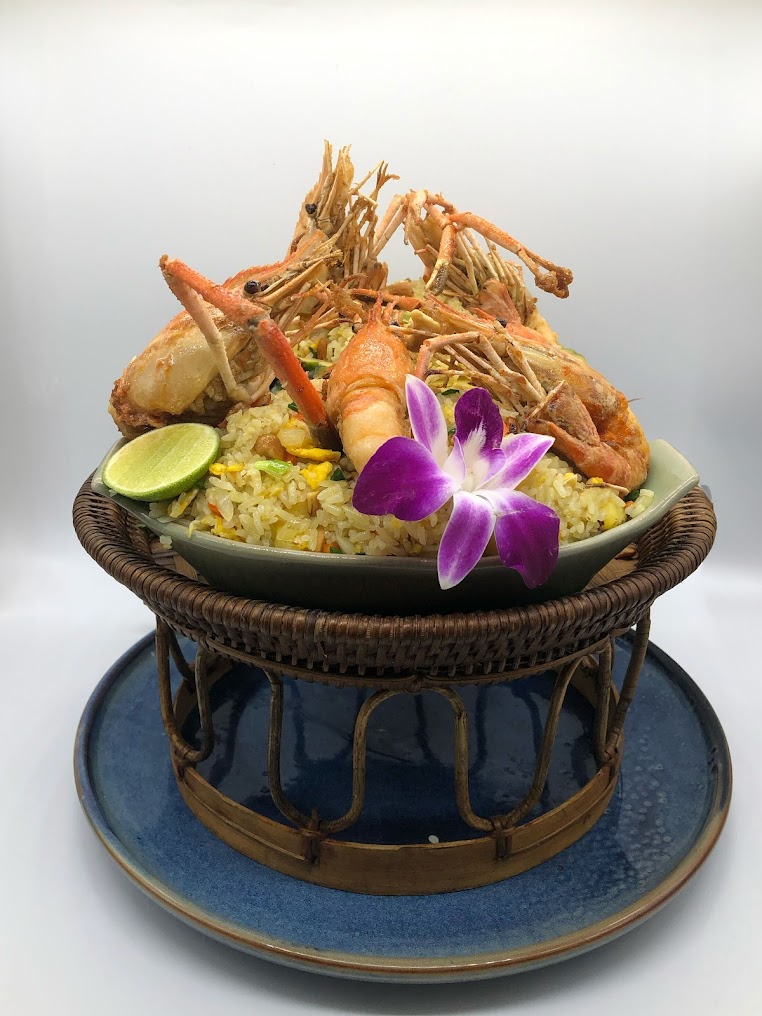
Fried rice (khao pad) is your safest bet for consistent quality. A chicken or pork fried rice at a local spot costs 50-60 baht, comes with a wedge of lime and chili flakes, and fills you up without any culinary risk. It’s not glamorous, but neither is running out of money in Thailand.
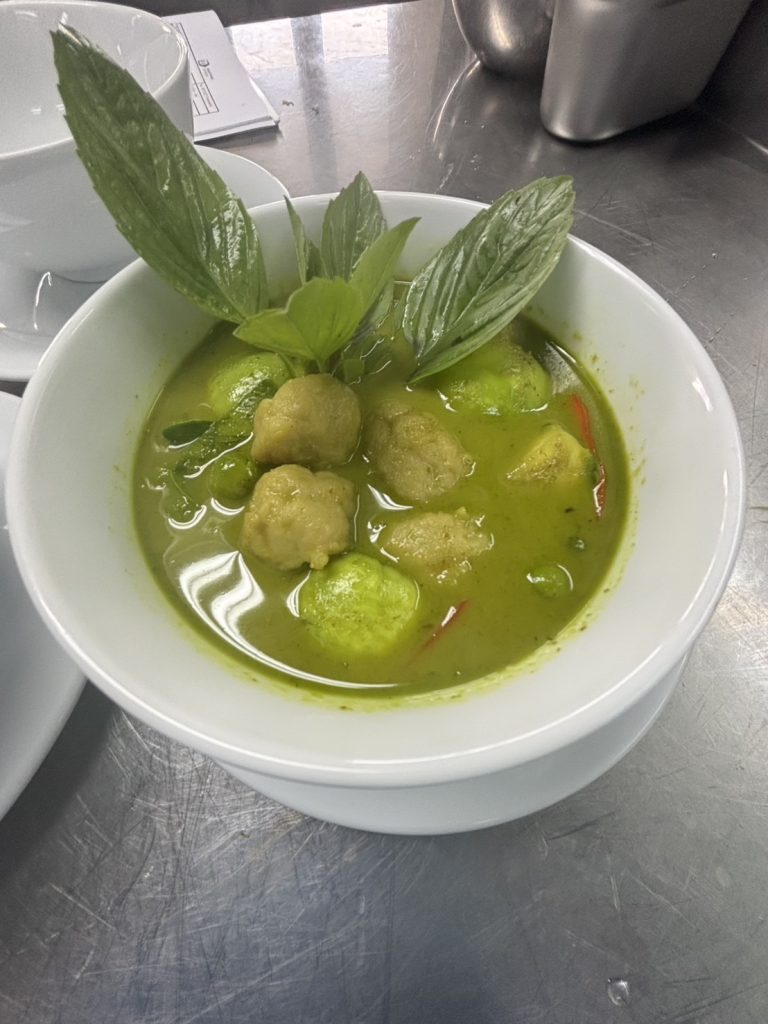
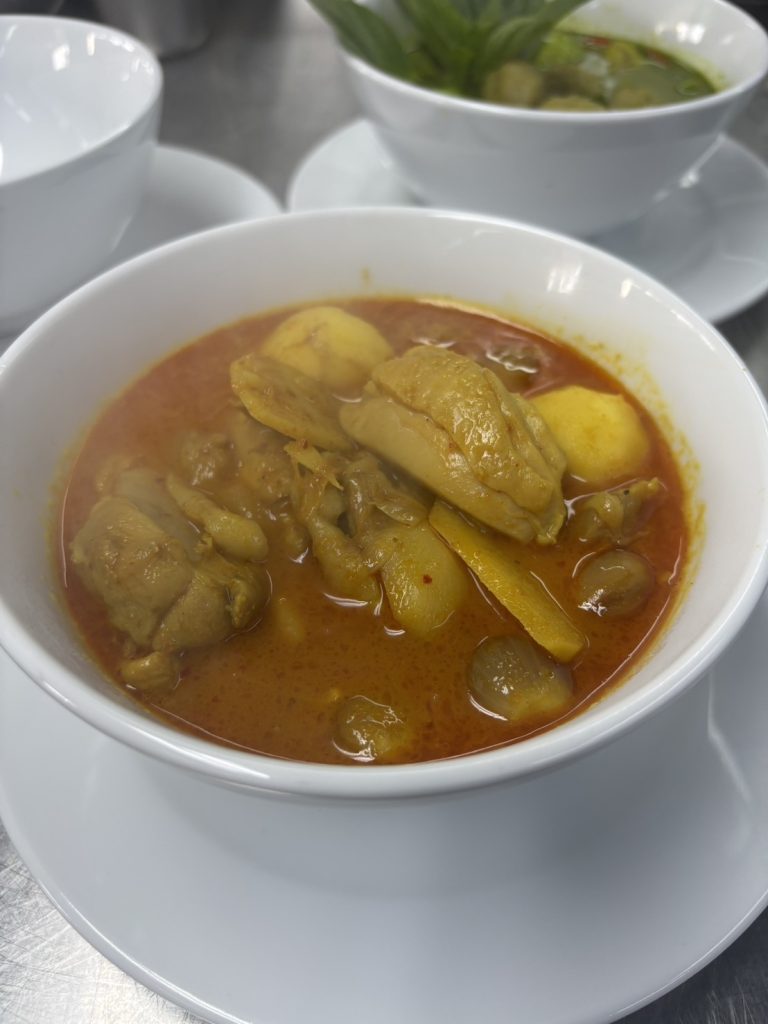
Curries are where Bangkok’s cheap food story gets interesting. A serving of green curry (gaeng keow wan) with rice typically costs 60-80 baht at neighborhood restaurants. The broth should be coconut-rich, slightly sweet, and aromatic with Thai basil. Red curry runs similar money. Massaman curry, being richer and more complex, sometimes edges toward 90 baht but remains an exceptional value.
Som tam (green papaya salad) is the essential budget lunch. A full serving with sticky rice and grilled chicken costs around 60-70 baht at the countless som tam carts scattered through Old Town. It’s fresh, it’s cheap, it’s spicy enough to justify the entire trip to Thailand, and it keeps you going through an afternoon of temple-hopping.
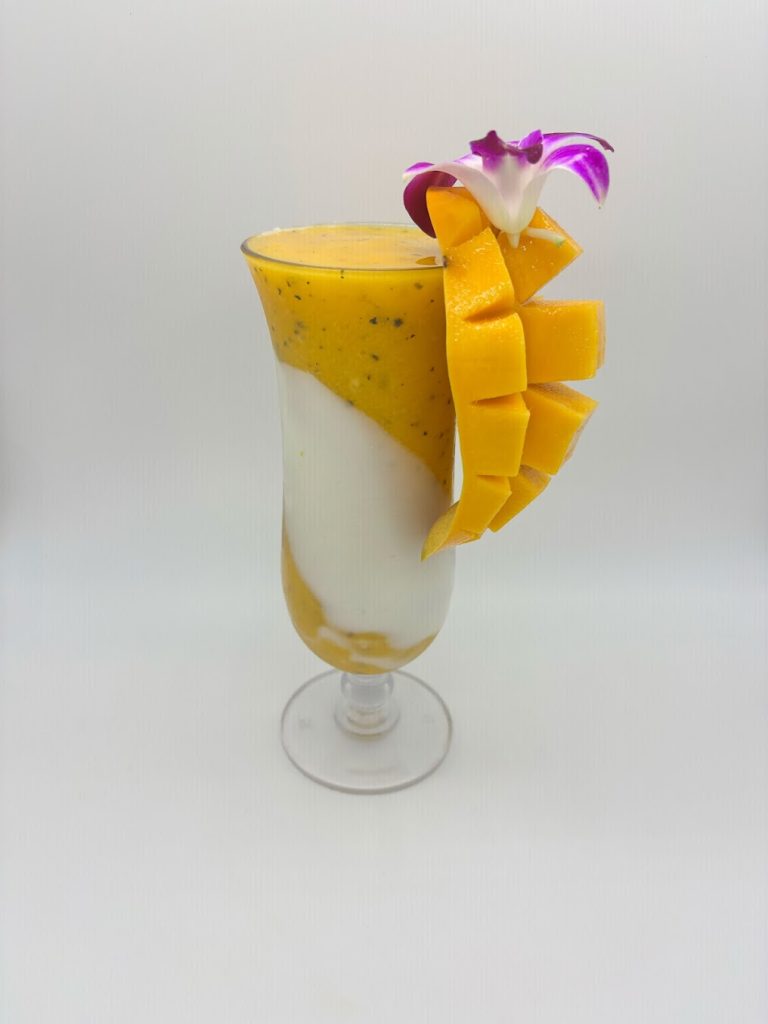
Mango sticky rice closes out a budget lunch perfectly at 50-60 baht. If you’re near Tha Tien market, this is your afternoon reward for navigating Bangkok’s heat.
For dinner, the same rules apply. Tom yum soup (60-80 baht), laab salad (50-70 baht), and grilled river fish (150-180 baht, sharable) round out your options without ever crossing the 150-baht threshold for individual dishes.
Samsen Center: The Budget Traveler’s Best Friend in Bangkok Old Town
Here’s where the search ends. Samsen Center sits on Soi Samsen 2, a five-minute walk from Khao San Road that takes you from tourist trap territory into genuine local dining territory. This is our restaurant, and we’re confident in what we offer: real food, honest prices, and portions that justify the walk.
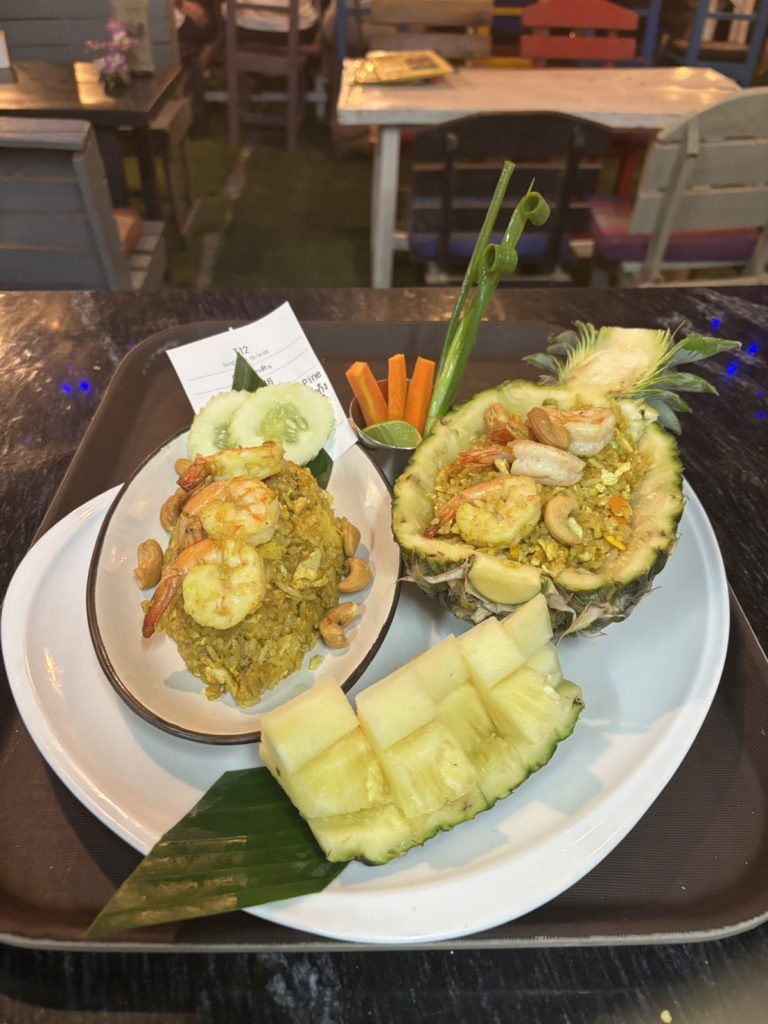
Every main dish on our menu sits between 60 and 200 baht. The vast majority fall comfortably under 150 baht. Our Pad Thai is 90 baht. Our green curry is 100 baht. Our fried rice selection runs 70-90 baht depending on protein. We’ve designed the menu for travelers who want to eat properly without treating every meal like a financial decision.
The difference isn’t just price. It’s understanding that backpackers and budget travelers deserve a proper restaurant experience, not just street food every night. At Samsen Center, you sit down. The air conditioning works. The cocktails are 150-200 baht (and if you’re going to spend on one luxury, this is where to do it—our cocktail bar serves 56 options). But the food remains accessible. A full meal with starter, main, and drink comfortably lands under 350 baht per person.
We know Khao San Road is loud and exciting and impossible to avoid completely. But when you’re done with the backpacker mile and your stomach is growling, walking five minutes to Soi Samsen 2 changes everything. The same goes if you’re visiting the Grand Palace and need somewhere decent to refuel without the Grand Palace tax. This is hub article territory—a reliable basecamp for your Bangkok eating strategy.
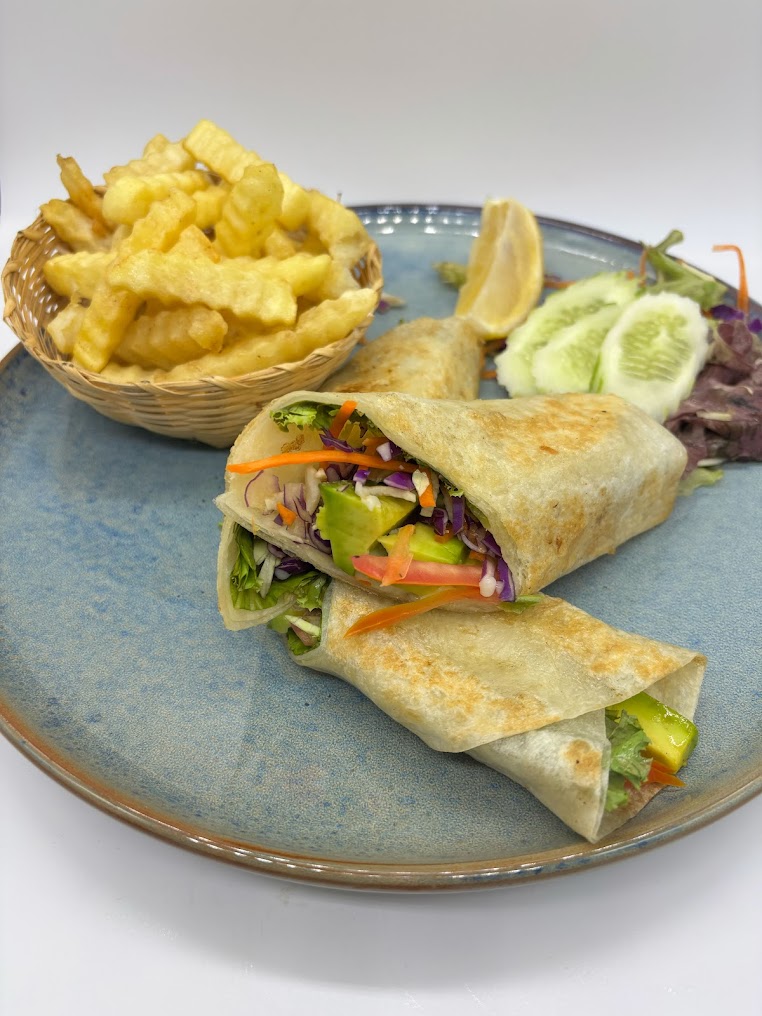
For those with dietary requirements, we haven’t forgotten you. Our vegan and vegetarian Thai options are full-flavored and genuinely considered, not afterthought salads. If you’re traveling with dietary restrictions, Bangkok can be challenging; we’re trying to make it easier.
The late-night question matters too. Bangkok’s Old Town quiets down after 10 PM, but Samsen Center stays open until 1 AM daily. When you’ve burned through your evening wandering and every other place is shuttered, we’re still cooking.
FAQ: Eating Cheap in Bangkok Old Town
Is 150 THB enough for a meal in Bangkok?
Absolutely. 150 baht is more than enough for a substantial Thai meal with rice and a main dish. At local spots, you’ll often spend 60-90 baht. At tourist-facing restaurants, 150 baht might get you an appetizer and a small main. The key is knowing where to look—stepping off the main tourist streets immediately unlocks better pricing.
Should I avoid Khao San Road for food?
Yes, with very few exceptions. Khao San Road exists for atmosphere, not value. A bottle of Chang beer might cost three times what you’d pay at a local 7-Eleven, and the food is aimed at travelers who don’t know better. Walk five minutes to Soi Samsen 2 and eat for a quarter of the price with better results.
Is street food safe in Bangkok Old Town?
Generally, yes. Street food safety in Bangkok depends more on turnover and freshness than anything else. High-traffic vendors who cook to order are safer than stagnant setups. Choose vendors where locals are eating. Use common sense—well-cooked food from busy carts is perfectly fine.
Where can I eat after 10 PM near Khao San Road?
Most local shophouses close by 9 or 10 PM. Samsen Center is one of the few spots in the immediate area open until 1 AM, which makes a genuine difference for late-night hunger. Late-night dining in Bangkok Old Town often requires planning ahead or knowing where the night owls cook.
What’s the best way to find local restaurants in Bangkok?
Look for places without English signs, menus without photos, and vendors with small cooking setups focused on one or two dishes. Ask your accommodation staff where they eat—locals know the value spots. Follow the lunch crowds. If a place is packed at noon on a weekday, the food is good and the prices are right.
—
The math is simple: Bangkok charges premium prices in tourist zones and honest prices in local neighborhoods. The Grand Palace and Khao San Road are tourist zones. Soi Samsen 2 is a local neighborhood. The walk between them takes five minutes and saves you 50-100 baht per meal. Multiply that across a week’s eating, and you’ve funded an extra day of travel.
Cheap food in Bangkok Old Town isn’t a myth. It’s just five minutes away from where you’re standing.